Your Prospect Decides in the First Few Minutes. Stop Pitching and Let Them Feel It.

A prospect makes up their mind about your firm faster than anyone in the meeting wants to admit. Not after the philosophy slide, not after the fee discussion, not after the references. In the first few minutes, they decide how they feel about handing you their financial life, and most of what follows is them looking for reasons to confirm the feeling they already have.
Most firms spend those first minutes doing the one thing least likely to move a prospect: pitching. Explaining the process, walking the deck, reciting the credentials. A pitch asks the prospect to believe a claim. An experience lets them feel the answer for themselves, and in a trust business, felt beats argued every time.
Seven Minutes Taught Me This
I learned it under pressure. Fynancial was selected for a demo slot at a major industry conference: seven minutes on stage to make a room care about a product they had never heard of. Seven minutes is not enough time to explain a product. It is barely enough to make someone feel one.
So we stopped trying to explain. Instead of getting up and saying, here is who I am and here is our product, we built a story and an experience, and we rehearsed it until the seven minutes did the work. The payoff was not the applause. It was that people who had never heard of us walked up afterward, and a year later many of them were clients. The firms in that room did not choose us because our feature list won a comparison. They chose us because, for a few minutes, they felt what the product was, and that feeling outlasted every spec they forgot.
Why the Deck Loses
A deck is a claim delivered in the firm's language. It asks the prospect to translate bullet points into a feeling about their own life, and most prospects will not do that work, especially not while deciding whether to trust you. The information may be excellent and still fail to land, because information is not the thing the prospect is trying to resolve. They are trying to answer one question: what will it actually feel like to be a client here.
An experience answers that question directly. When a prospect can see and touch what your clients see and touch, the abstract becomes concrete. You stop making a case for the relationship and start giving them a preview of it. That is a fundamentally stronger position, because you are no longer competing on who argues best. You are competing on who lets the prospect feel the most, and most firms are still reading slides.
Build the First Few Minutes on Purpose
The advisors who win prospect meetings treat the opening minutes as the most valuable real estate they have, and they prepare accordingly. The preparation is the whole game. A great party is not thrown by opening the door and hoping, it is built beforehand, and a great prospect meeting is the same. The firm that walks in and says, let me show you exactly what our clients experience, and then opens a polished, branded interface the prospect can hold, is making an argument no deck can match.
Then the experience continues after the room. When a prospect leaves and, before they are even home, receives something branded and specific from you while the competing advisor sends a generic recap two days later, the difference is not subtle. It confirms the feeling they already formed, on your side.
The Reframe
Stop asking how to make your pitch more convincing. Ask how to make the first few minutes something the prospect can feel rather than something they have to be talked into. Prospects do not remember the fourth slide. They remember whether the experience felt like a firm they would want managing their money. Build those minutes on purpose, and let the prospect reach the conclusion themselves. It will hold far longer than anything you argued them into.
See how firms let prospects experience the relationship before they sign →
Tom co-founded Fynancial on the thesis that the gap between the quality of independent advice and the digital experience used to deliver it is one of the most addressable problems in wealth management. He leads product vision, enterprise partnerships, and the Experience Alpha framework.
Related Insights





What firms say after launching with Fynancial
I am not exaggerating when I say our app has helped us win over $10M in new AUM between two separate prospects. The vision Fynancial has is incredible!

This highly personalized communication solution enables us to connect with clients like never before. Delivering real advice from real advisors with authentic, timely, human-centered guidance.

The Prime Capital app is our all-in-one hub. Seamless advisor to client communication, fully integrated with our core tech stack. The Salesforce integration ties it all together perfectly.

We are currently managing the majority of our client relationships daily through our app. It has been a game-changer, and I cannot say enough positive things about Fynancial and their entire team.

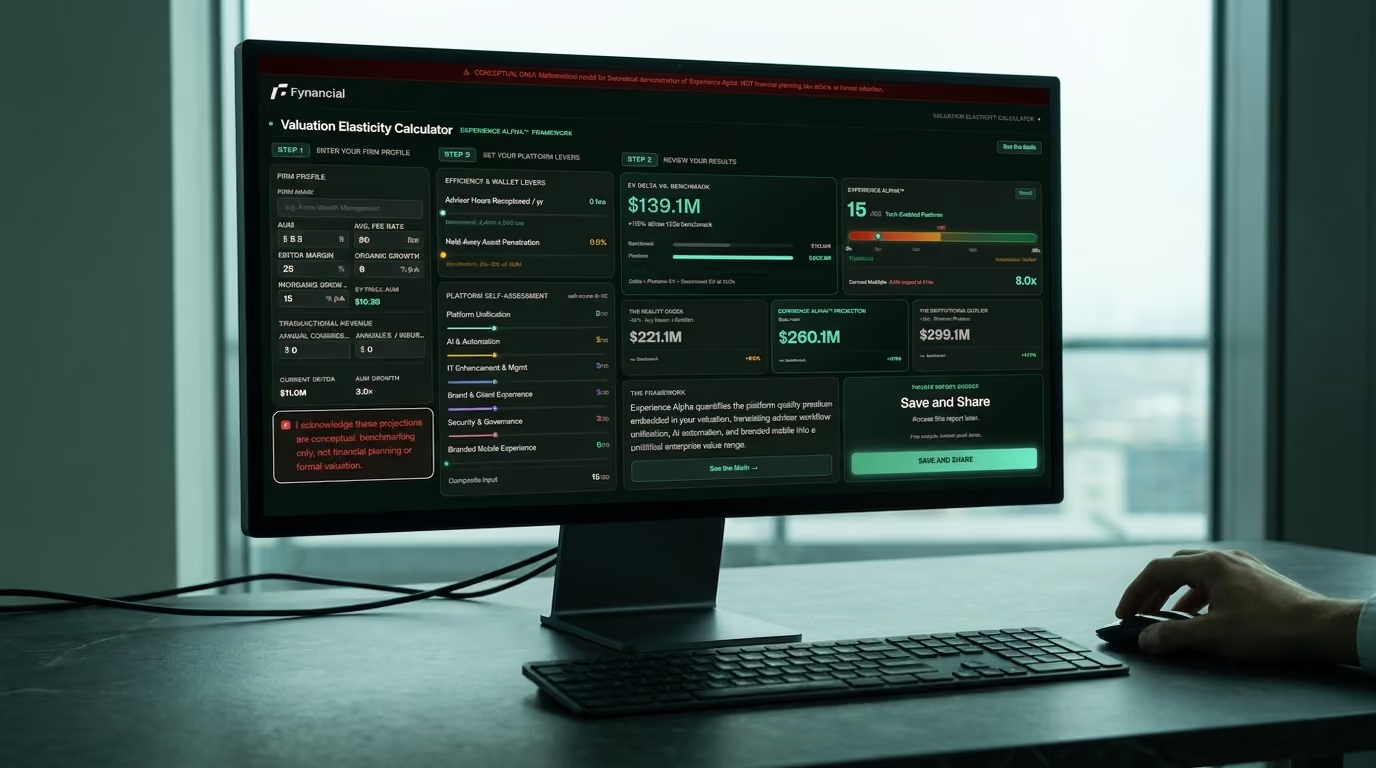
See your Platform Premium in 2 minutes
Model AUM → multiple uplift. Live. Under 2 min.
Enter AUM, headcount, and growth. The calculator maps how a branded client layer can move your valuation multiple, recalculating as you adjust inputs.