Growth Exposes the Operations You Built Quietly, or the Ones You Didn't

There is a comfortable myth that growth causes operational strain. It does not. Growth reveals operational strain that was already there, hidden by low volume. A firm can run on heroics, tribal knowledge, and manual workarounds indefinitely while it is small, because the gaps are small too. Add scale, whether from organic momentum or an acquisition, and every one of those gaps becomes visible at the same time, usually in the same quarter.
This is why the transition from small to scaling is the moment that separates firms, and why you effectively get one clean shot at it. The capacity that carries a firm through growth is not something you can assemble in the middle of the surge. It has to exist before the volume shows up.
We Got the Timing Almost Right, and Almost Was the Lesson
Fynancial went through this transition and did not get everything right. There is a specific moment when people stop asking who you are and start saying, oh, you are the firm with the app, and the inbound starts arriving on its own. That moment is a gift and a test. We had put capital on the balance sheet ahead of need and expanded the team with hires who could carry weight, which is why the surge was survivable. Where we were slower, the strain showed immediately, because that is what growth does. It finds the thing you had not built yet and puts your whole client base in front of it.
The lesson I took is that readiness is not something you feel your way into once demand arrives. By the time you feel the demand, the window to prepare quietly has closed, and now you are building operations in public, in front of clients, which is the most expensive way to do it.
The Same Physics Applies to an RIA
This is not only a startup dynamic. It is exactly what plays out when an advisory firm scales through acquisition or absorbs a wave of new clients. The deal closes, the client count jumps, and the operational questions that were manageable at the old size arrive all at once: onboarding that relied on a person's memory, workflows that lived in one associate's head, a client experience that was hand-delivered rather than systematized.
Firms that scale well are not the ones with the best deal flow. They are the ones that built the operating capacity, the onboarding, the training, the systematized client experience, before the growth required it. The ones that treat operations as something to fix after the volume arrives spend the growth phase in triage, and clients feel every seam. In a diligence process, a buyer can see the difference immediately, because operational drag that was invisible at small scale is very visible at large scale, and it comes straight out of the multiple.
Readiness Is Infrastructure
The practical version of this is unglamorous and decisive. Before the inbound wave, before the acquisition, before the growth you are hoping for, you want the capital, the team, the plan, and a clear picture of who you serve already in place. You want the onboarding documented and repeatable rather than heroic. You want the client experience to run on a system, not on the specific people who happen to be doing it today.
None of that is a reaction to growth. It is infrastructure you build in the quiet period precisely so that growth reveals strength instead of exposing gaps. The firms that understand this prepare when it feels premature, because the alternative is preparing when it is already too late.
Growth will show everyone what you built. The only question is whether it reveals the operations you put in place quietly, or the ones you never got around to.
See how firms systematize onboarding and the client experience →
Tom co-founded Fynancial on the thesis that the gap between the quality of independent advice and the digital experience used to deliver it is one of the most addressable problems in wealth management. He leads product vision, enterprise partnerships, and the Experience Alpha framework.
Related Insights




What firms say after launching with Fynancial
I am not exaggerating when I say our app has helped us win over $10M in new AUM between two separate prospects. The vision Fynancial has is incredible!

This highly personalized communication solution enables us to connect with clients like never before. Delivering real advice from real advisors with authentic, timely, human-centered guidance.

The Prime Capital app is our all-in-one hub. Seamless advisor to client communication, fully integrated with our core tech stack. The Salesforce integration ties it all together perfectly.

We are currently managing the majority of our client relationships daily through our app. It has been a game-changer, and I cannot say enough positive things about Fynancial and their entire team.

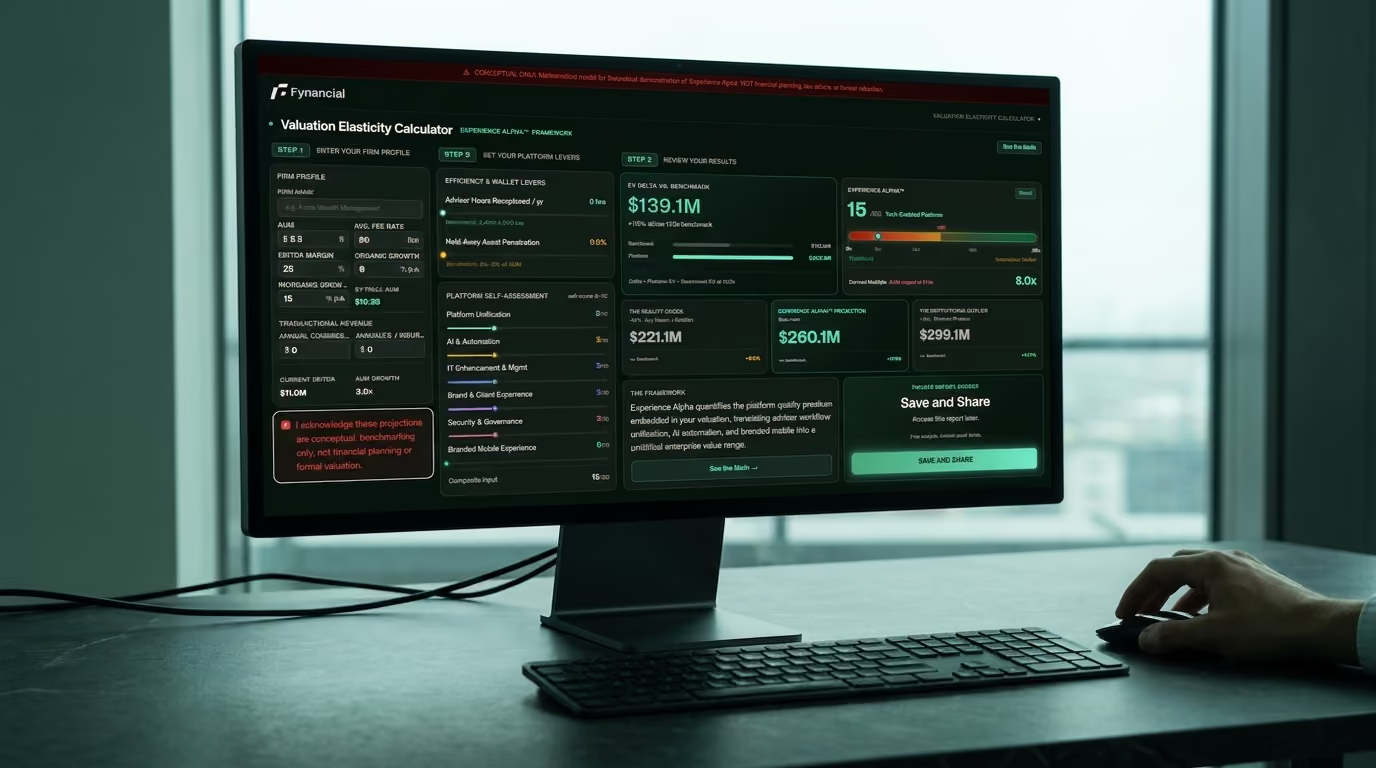
See your Platform Premium in 2 minutes
Model AUM → multiple uplift. Live. Under 2 min.
Enter AUM, headcount, and growth. The calculator maps how a branded client layer can move your valuation multiple, recalculating as you adjust inputs.